

You walk into a birthday party and one child immediately runs toward the bounce house.
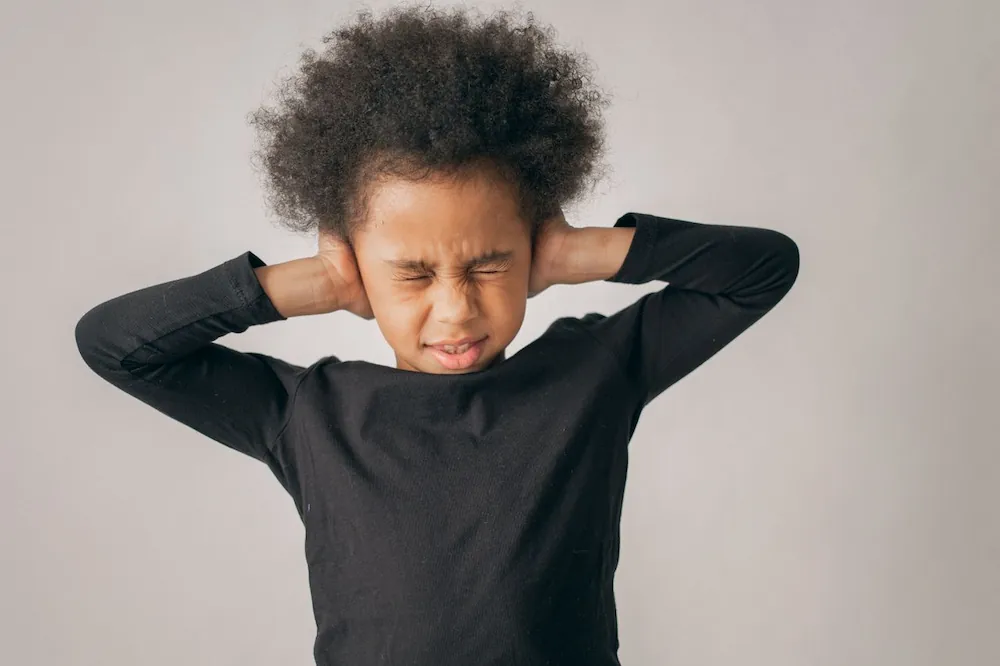
Your child covers their ears and wants to leave.
Same room. Same music. Same kids. Same environment.
Completely different experience.
And that's something I wish more parents understood about sensory processing.
Two children can be in the exact same room but their nervous systems can be experiencing two completely different environments.
What's fun and exciting to one child can genuinely feel overwhelming to another.
"It's Not Even That Loud"
I've heard parents say this before.
And they're right.
It might not seem loud to you.
But your nervous system isn't their nervous system.
Our brains are constantly receiving information from the world around us. Sounds, lights, smells, touch, movement, temperature, and everything else happening around us have to be noticed, organized, and filtered.
Most of this happens without us ever thinking about it.
Right now, there may be an air conditioner running near you. Someone talking in another room. Cars outside. Your shirt touching your skin.
Your brain decides what's important and what can fade into the background.
Some children's nervous systems don't filter that information as easily.
So imagine trying to listen to someone speak while your brain is giving equal importance to the music, another conversation, chairs moving, a hand dryer going off, someone's perfume, the fluorescent lights, and the feeling of your socks inside your shoes.
That's exhausting.
Sensory Overload Doesn't Always Look Like Sensory Overload
This is where things get interesting.
A child experiencing sensory overload doesn't always cover their ears and say, "This environment is overwhelming my nervous system."
Obviously.
They might run away.
Cry.
Become extremely hyperactive.
Stop listening.
Get aggressive.
Cling to you.
Refuse to participate.
Or completely melt down over something that seems unrelated.
That's why looking only at the behavior can be misleading.
Sometimes the behavior we're trying to stop is the nervous system's way of telling us:
I've had enough.
Why Does My Child Cover Their Ears?
Covering the ears around loud or unexpected sounds can be one of the more obvious signs of auditory sensitivity.
You might notice it around:
Hand dryers.
Vacuum cleaners.
Fire alarms.
Blenders.
Movie theaters.
Birthday parties.
School cafeterias.
Crowded restaurants.
For some children, predictable sounds are manageable while sudden sounds are much harder.
For others, it's not one particular noise. It's the combination of everything happening at once.
Again, the goal isn't to decide whether the environment should be overwhelming.
The goal is understanding how your child is actually experiencing it.
Don't Make Avoidance the Only Strategy
If something overwhelms your child, the natural instinct is to remove them from it.
Sometimes that's exactly what they need in that moment.
But our long-term goal isn't necessarily to create a world where your child never encounters loud noises, crowds, or uncomfortable sensations.
We want to help their nervous system become better equipped to navigate the world they're going to live in.
That process looks different for every child.
Sometimes we modify the environment.
Sometimes we prepare them ahead of time.
Sometimes we provide sensory strategies.
Sometimes we gradually build tolerance.
And sometimes we simply recognize that their nervous system needs a break.
This is where understanding your individual child's sensory profile becomes incredibly valuable.
Look at What Happens Before the Meltdown
If your child frequently struggles in public places, start becoming a detective.
Don't only look at the meltdown.
Look at the 30 minutes before it.
Was the environment loud?
Were there lots of people?
Had they been there for a long time?
Were they hungry or tired?
Did they have several sensory-heavy activities that day?
Did something unexpected happen?
You may start noticing that what looked random actually isn't random at all.
There's a pattern.
When Can Occupational Therapy Help?
If sensory sensitivities are regularly interfering with your child's ability to participate in everyday life, that's when it may be worth looking deeper.
Maybe they avoid birthday parties.
Getting dressed becomes a battle because certain clothes feel unbearable.
Haircuts are extremely difficult.
Restaurants consistently end in meltdowns.
School assemblies are overwhelming.
Or family outings revolve around avoiding things that might upset them.
Pediatric occupational therapy can help identify how a child processes sensory information and develop individualized strategies to help them participate more successfully in everyday environments.
At Kynetic Integrations, we're not trying to make every child experience the world exactly the same way.
We're trying to understand their nervous system.
Because when we stop asking,
"Why can't my child just handle this?"
and start asking,
"What is their nervous system experiencing right now?"
we usually get much closer to the answer.
The environment doesn't have to feel overwhelming to us for it to feel overwhelming to them.